OpenAI Quietly Broke the Way You Build AI Apps
Published: April 21, 2026

Artificial Intelligence
Most developers focused on the wrong update. This one will break their systems.
You probably heard GPT-4o got retired.
You likely saw the drama unfold. The #Keep4o hashtag trending. Users are mourning the loss of their “warm, conversational” AI companion.
While everyone was looking at the model and the internet was busy being nostalgic, OpenAI changed the entire developer platform underneath it, and most developers didn’t notice.
OpenAI didn’t just remove a model.
They removed the era it belonged to.
And if you’re still building the old way, this matters more than any upgrade.
The OpenAI Assistants API deprecated timeline is already in motion , and it will break real production systems.
The Retirement Everyone Talked About — And Misread
On April 3, 2026, GPT-4o was fully retired across ChatGPT.
The API version? Gone even earlier February 16.
Most people treated it like a product change:
- “We lost a good model.”
- “GPT-5 feels different.”
- “Why remove something users liked?”
People treated it like a nostalgia story.
OpenAI’s own blog noted that only 0.1% of daily users were still choosing it. The “vast majority” had already moved to GPT-5.2
But that reaction missed the point.
OpenAI didn’t just remove a model.
They removed the era that the model belonged to.
The headline that mattered more was buried six scrolls down in OpenAI’s deprecation docs.
The Assistants API Is Being Killed. Quietly.
On August 26, 2025, OpenAI announced something most developers still haven’t internalized:
The OpenAI Assistants API is deprecated and will shut down on August 26, 2026.
No keynote.
No major blog post.
Just a dry notice in the documentation and a single thread in the developer forum.
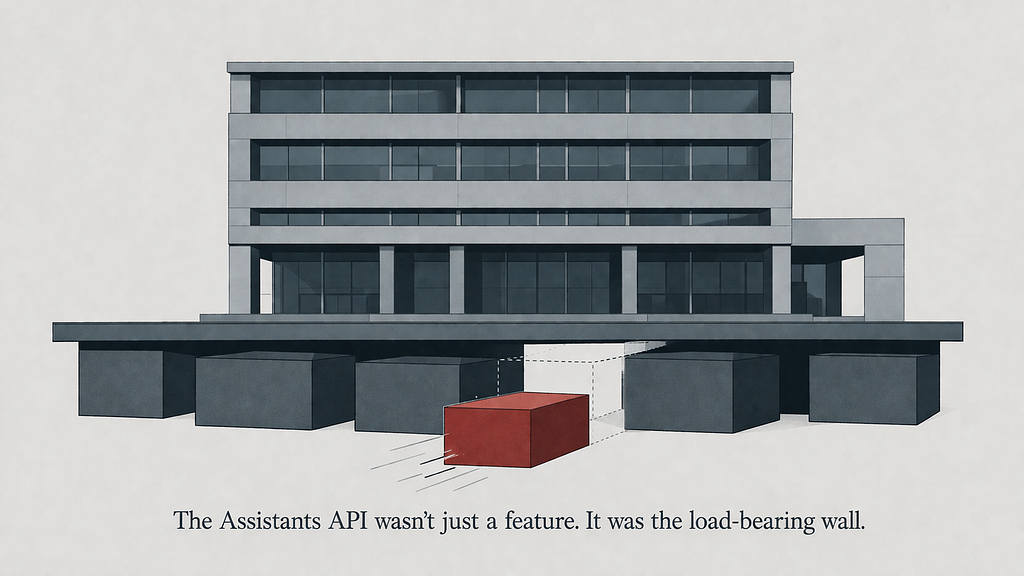
And that’s a problem, because the Assistants API wasn’t a niche feature. It was the foundation on which many developers built their AI products.
- Persistent threads (memory)
- Built-in tools
- Managed agent behavior
- Server-side orchestration
Now?
It’s all going away.
The replacement is called the Responses API.
And it works completely differently.
What Actually Changed Under the Hood
Most developers think this is an API migration.
It’s not.
It’s a complete reversal in how OpenAI expects you to build.
In plain English: They built it when they didn’t really know what agents needed to be. Now they do. And they’re ripping out the foundation.
Old Way: Assistants API
- OpenAI manages the agent
- State lives on its servers
- Tools are abstracted
- You orchestrate less
# Create an assistant (persistent object)

assistant = openai.beta.assistants.create(
    name="MyAgent",
    instructions="You are a helpful coding assistant.",
    model="gpt-5.2",
    tools=[{"type": "code_interpreter"}],
)

# Create a thread (server-side memory)
thread = openai.beta.threads.create()
# Add a message and run
run = openai.beta.threads.runs.create(thread_id=thread.id, assistant_id=assistant.id)
New Way: Responses API
- You manage orchestration
- You control state
- You handle tool logic
- You own reliability
# No persistent assistant object. No threads.
# Just send input, get output.
response = openai.responses.create(
    model="gpt-5.2",
    input=[{"role": "user", "content": "Help me debug this code."}],
    conversation="conv_abc123",  # optional persistent context
)
The surface got simpler. The responsibility moved to you.
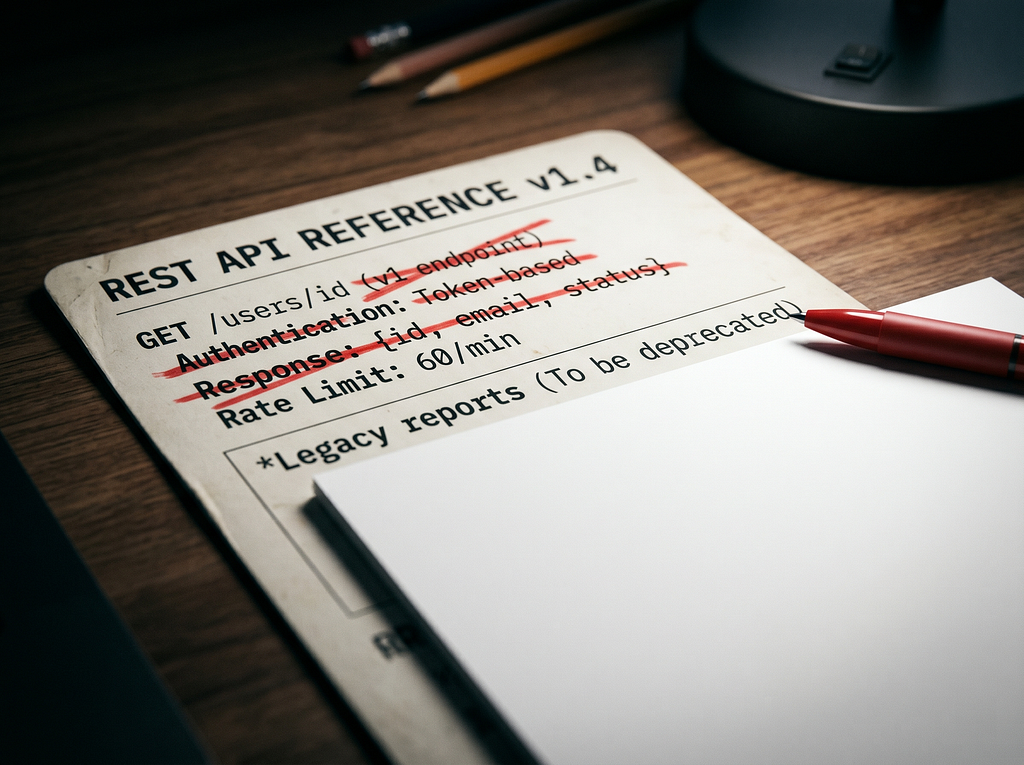
The Model Naming Is Also a Mess Nobody’s Documenting
While all of this was happening, OpenAI was also quietly overhauling its model lineup in ways that are genuinely confusing.
- GPT-5.1 → GPT-5.2 → GPT-5.3
- Codex variants removed from UI
- Hidden fallback models introduced
First, GPT-5.1 stepped in for GPT-4o. Then, almost immediately, GPT-5.2 replaced 5.1. Recently, GPT-5.3-Codex dropped as their first combined training stack. Even stranger, GPT-5.3 Instant Mini is currently acting as the silent fallback model when users hit rate limits, despite not even existing in the developer dashboard’s model picker.
This isn’t accidental.
It’s what rapid infrastructure consolidation looks like.
And it reinforces the real takeaway:
You can’t treat this platform as stable. You have to treat it as evolving infrastructure.
The Part Most Developers Still Haven’t Realized
The Assistants API was OpenAI’s early abstraction layer.
It was built before:
- Reasoning models matured
- Tool use stabilized
- Agent patterns were understood
Now OpenAI is doing something rare:
They’re deprecating their own abstraction to expose lower-level primitives.
This means:
- More flexibility
- Better performance
- Fewer hidden constraints
But also:
- More engineering responsibility
- More room for mistakes
- More complexity in production
What This Actually Means for You
If you are running production code today, write this date on a sticky note and put it on your monitor: August 26, 2026.
On that day, calls to /v1/assistants and /v1/threads won’t just slow down or return warnings. They will hard-fail. Period.
Three things to do now:
1. Audit your codebase immediately: Run a global search for openai.beta.assistants and openai.beta.threads. If those strings exist anywhere in your active repos, your clock is officially ticking.
2. Read the migration guide.
- Simple apps → manageable
- Agent workflows → significant rewrite
- Multi-tool systems → architectural rethink
It’s at platform.openai.com/docs/assistants/migration.
The Responses API is genuinely better in some ways, you get MCP support, computer use, deep research tools, and better performance. But the migration is non-trivial for complex workflows.
3. Do not procrastinate.
The developer forums are currently flooded with engineers who “almost finished” building an app on the old API right when the notice dropped. Don’t be the dev panicking in late July.
Because when August hits, it’s not degradation.
It’s shutdown.
The Pattern Most Developers Miss
This isn’t the first time OpenAI has done this:
- GPT-4o → retired
- Assistants API → deprecated
- Models → reshuffled rapidly
GPT-4o: retired quietly with minimal notice. Backlash forced a reversal in August 2025, then final retirement in February 2026.
Assistants API: announced deprecation buried in changelog notes, one year horizon.
This isn’t chaos.
It’s velocity.
And the developers who adapt aren’t the ones reading announcements.
They’re the ones:
- Watching deprecations
- Tracking changelogs
- Designing for instability

Is the Assistants API still working right now?
Yes. As of April 2026, the OpenAI Assistants API deprecated status is active but still functional. It will shut down completely on August 26, 2026. After that, endpoints like /v1/assistants and /v1/threads will stop working entirely.
What replaces the Assistants API?
The Responses API and Conversations API replace it.
- Responses API → handles generation + tool use
- Conversations API → manages persistent context
- Prompt objects → replace assistant definitions
This new architecture gives more control, but requires more implementation effort.
Did GPT-4o retirement affect the API too?
Yes. The chatgpt-4o-latest API endpoint was retired on February 16, 2026.
However, some variants like GPT-4o mini and audio-related models still exist, for now.
The GPT-4o retirement was visible. The OpenAI Assistants API deprecated shift is what will break real systems.
This is not a simple upgrade.
It’s a transition from:
Managed abstractions → To developer-owned architecture
And if your production system still depends on /v1/assistants
You’re already behind the platform.
OpenAI didn’t announce this loudly.
They never do for the things that matter most to developers.
They feel like something quietly disappearing, until your system depends on it.
That’s the real change you needed to notice.
Keep an eye on your codebase, read the docs, and don’t let August sneak up on you.
A message from our Founder
Hey, Sunil here. I wanted to take a moment to thank you for reading until the end and for being a part of this community. Did you know that our team run these publications as a volunteer effort to over 3.5m monthly readers? We don’t receive any funding, we do this to support the community.
If you want to show some love, please take a moment to follow me on LinkedIn, TikTok, Instagram. You can also subscribe to our weekly newsletter. And before you go, don’t forget to clap and follow the writer️!
OpenAI Quietly Broke the Way You Build AI Apps was originally published in Artificial Intelligence in Plain English on Medium, where people are continuing the conversation by highlighting and responding to this story.

